



So, if an asset cost $1,000, you might write off $100 every year for 10 years. Under the generally accepted accounting principles (GAAP) for public companies, expenses are recorded in the same period as the revenue that is earned as a result of those expenses. So, depreciation refers to the “using up” of a fixed asset and to the process of allocating the asset’s cost to expense over the asset’s useful life. To illustrate how the journal entries are made under the double-declining balance method for the $10,000 piece of equipment, remember that the rate doubles from 20 to 40 percent.

How the Tax Advantage Works
Accelerated depreciation techniques charge a higher amount of depreciation in the earlier years of an asset’s life. One way of accelerating the depreciation expense is the double decline depreciation method. Depreciation is an accounting process by which a company allocates an asset’s cost throughout its useful life. Firms depreciate assets on their financial statements and for tax purposes in order to better match an asset’s productivity in use to its costs of operation over time. The third step involves applying this fixed DDD rate to the asset’s Book Value at the beginning of the year. Book Value is the original Cost Basis minus all accumulated depreciation taken in prior years.
Advantages of Double Declining Balance Depreciation
- Like in the first year calculation, we will use a time factor for the number of months the asset was in use but multiply it by its carrying value at the start of the period instead of its cost.
- Simultaneously, you should accumulate the total depreciation on the balance sheet.
- The double declining balance (DDB) method is a depreciation technique designed to account for the rapid loss of value in certain assets.
- In summary, while the Double Declining Balance method offers significant advantages, it’s essential to weigh these against its potential drawbacks to determine if it’s the right choice for your business.
- For an asset that generates revenue evenly over time, the SL method follows the matching principle.
These methods help to more accurately reflect the wear and tear on an asset, as assets tend to depreciate faster early in their life. Additionally, they lead to deferred income taxes, allowing businesses to retain more cash in the short term. Calculating depreciation accurately, regardless of complexity, and applying it strategically can make the difference between a smart financial move and a costly compliance mistake. Using the double-declining balance method allows you to take Accounting for Churches larger depreciation expenses in the earlier years of an asset’s useful life. The first year that this occurs it becomes necessary to calculate depreciation this way. Essentially, this simply means that you use the straight-line method for the remainder of the asset’s useful life.
- 1- You can’t use double declining depreciation the full length of an asset’s useful life.
- The switch is necessary because the fixed DDD rate applied to a declining book value will eventually calculate an expense smaller than the straight-line expense on the remaining value.
- Straight line depreciation spreads costs evenly and provides predictable expense recognition.
- While straight-line depreciation rates offer more stable expense reporting, the double-declining balance method takes a more detailed—and often realistic—view.
- Depreciation is the systematic allocation of the cost of a tangible fixed asset over its estimated useful life, reflecting how the asset’s economic benefits are consumed.
Accumulated Depreciation Over the Asset’s Lifespan

As tax professionals, we’re always trying to calculate DDB to conform to the tax rules and end up doing this manually with VLOOKUPs and depreciation tables. From this example it is obvious, that over the 5 years useful life of the asset in the beginning depreciation is much higher comparing to later years. Multiply depletion per unit by the number of units extracted in the reporting period to determine the depletion expense for that period. Yes, DDB is permitted under both IFRS, Saudi GAAP, as long as it reflects the pattern in which the asset’s future economic benefits are expected to be consumed. Find answers to the most common questions about double-declining balance depreciation. Each year, the company deducts $10,000, providing consistent expense reporting and making it easy to forecast future profits.
How to Calculate Double Declining Balance Depreciation
- Therefore, deferring tax payments to later years can lead to cost savings for the company.
- To master the art of Excel, check out CFI’s Excel Crash Course, which teaches you how to become an Excel power user.
- Another thing to remember while calculating the depreciation expense for the first year is the time factor.
- Depreciation rates between the two methods of calculating depreciation are similar except that the DDD Rate is twice the value of the SLD rate.
- This often aligns with the cash flow strategies of startups and other growth-stage companies.
- This is because, unlike the straight-line method, the depreciation expense under the double-declining method is not charged evenly over the asset’s useful life.
Companies need to opt for the right depreciation method, considering the asset in double declining method question, its intended use, and the impact of technological changes on the asset and its utility. DBM has pros and cons and is an ideal method for assets where technological obsolescence is very high. In summary, the Double Declining Balance depreciation method is a useful way to account for the value loss of an asset over time.
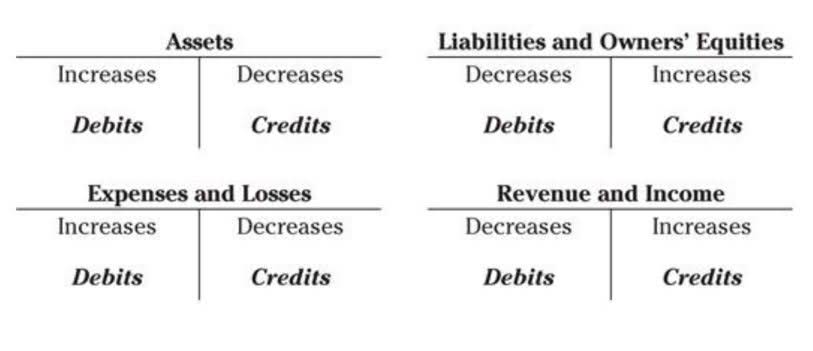
Ultimately, the double declining balance method is a strategic tool for improving short-term liquidity, giving you more room to maneuver when you need it most. Continue this process each year until the book value reaches the salvage value or the end of the asset’s useful life. For each year, multiply the book value at the beginning of the year by the DDB rate. The salvage value is what you expect to recover at the end of the asset’s useful life.
- DBM has pros and cons and is an ideal method for assets where technological obsolescence is very high.
- Depreciation is the process of allocating the cost of an asset over its useful life, reflecting its loss in value over time.
- In summary, the choice of depreciation method depends on the nature of the asset and the company’s accounting and financial objectives.
- Under IFRS and Saudi GAAP, a change must reflect a better estimation of the asset’s economic use and be disclosed.
Advantages and Disadvantages of Double Declining Balance Depreciation
Various software tools and online calculators can simplify the process of calculating DDB depreciation. These tools can automatically compute depreciation expenses, adjust rates, and maintain depreciation schedules, making them invaluable for businesses managing multiple depreciating assets. The double declining balance (DDB) method is a straightforward process that applies an accelerated depreciation formula to assets. QuickBooks It’s particularly useful for assets that lose a significant portion of their value early in their lifecycle.

Depreciation is the systematic allocation of the cost of a tangible fixed asset over its estimated useful life, reflecting how the asset’s economic benefits are consumed. Different methods serve different usage patterns, ensuring that expenses match revenue generation and reflect economic reality. Depletion follows similar conventions but pertains specifically to natural resources (e.g., minerals, oil, timber) whose value diminishes as the resource is extracted or consumed. In summary, when employing the double declining balance method, accountants should be aware of mid-year depreciation adjustments and the impact of the time-value of money on a company’s finances.